Basics
The 60-30-10 Color Rule for Outfits, Rooms and Design
The 60-30-10 color rule explained with examples for outfits, interior design and websites, plus hex code palettes you can copy and edit.
A color palette is a small set of colors you use together, for an outfit, a room, a brand or a design. Good palettes are not random: they start from one color and follow a simple structure. These five steps work for almost anything.
Start with the color you love or the one you already have: a favorite dress, a sofa, a logo. For clothes and makeup, pick a main color from your own color season so it flatters your skin; the seasonal color palettes show all 12.
A color scheme decides which other colors go with your main color, based on the color wheel.
You can see every scheme for one color in the color harmony generator.
Most palettes need one or two neutrals, such as cream, grey, navy or camel, so the bright colors have room to breathe. Then add one accent color in small amounts. The 60-30-10 rule explains how much of each to use.
#2A7F8F#94D9AA#D3DEEE#1B5546#E5674F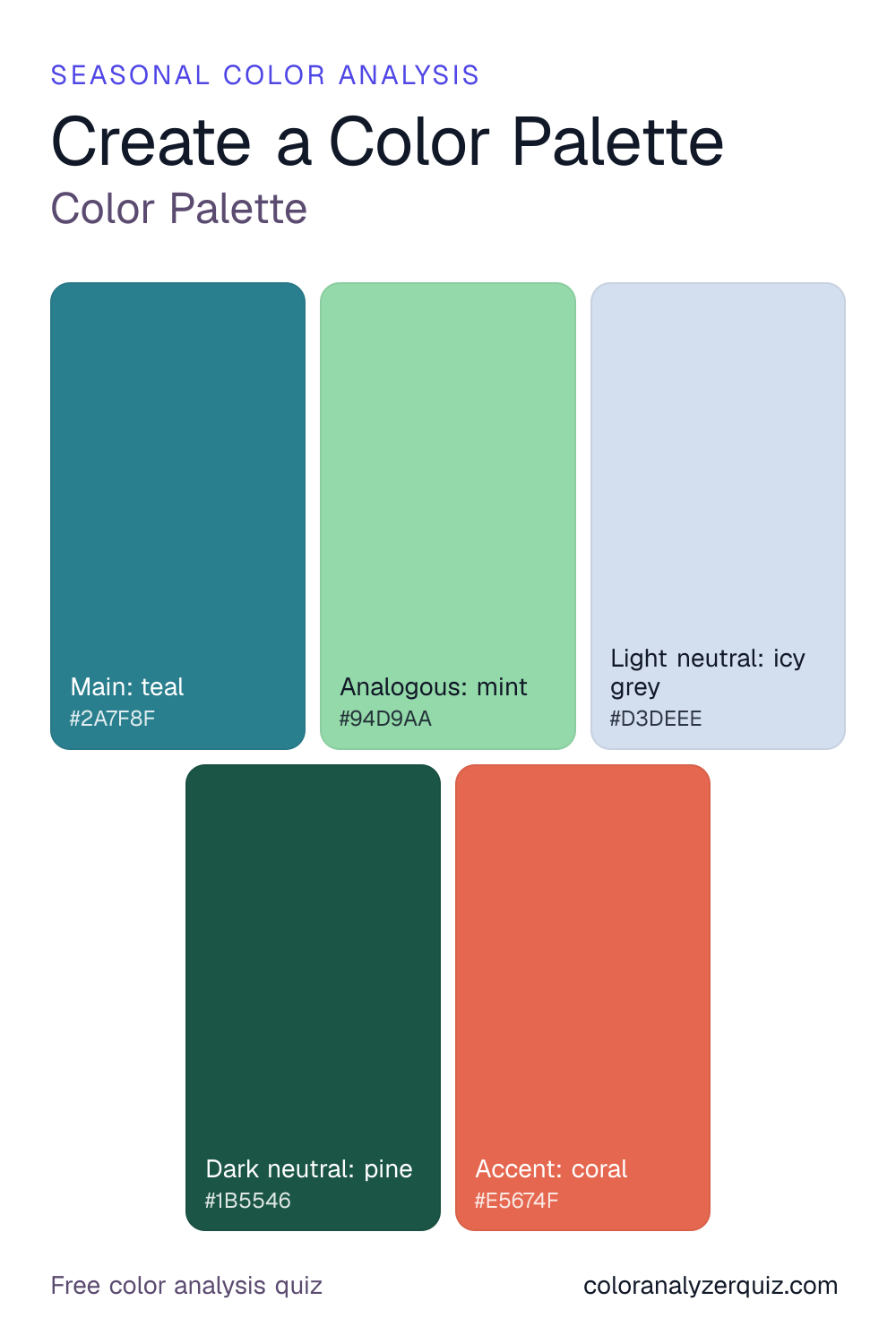
A palette needs a clear light color and a clear dark color. Without them everything looks flat. For design, check that text color and background are far apart in lightness; for outfits, a light top and a dark bottom (or the reverse) always looks balanced.
Try the palette in real life: hold fabrics together, mock up a page, or view it next to your face in daylight. When it works, save the hex codes so you can match colors when you shop or design. The color palette generator lets you lock colors, copy hex codes and download the palette as an image.
Shopping online? Paste any product color into the color checker to see how close it is to your palette.
Need a starting point? Browse color palette ideas with hex codes.
Three to five is enough for most outfits, rooms and designs: one main color, one or two supporting colors, a neutral and an accent.
Start from your color season, pick one main color and two neutrals from it, then add one accent. The seasonal palettes and the color palette generator make this quick.
Analogous or monochromatic. Both use closely related colors, so they almost always look good together.
Basics
The 60-30-10 color rule explained with examples for outfits, interior design and websites, plus hex code palettes you can copy and edit.
Basics
8 color palette ideas with hex codes: earthy neutrals, pastels, jewel tones, coastal blues and more, with where to use each and a link to edit it.
Wardrobe
The best white for each color season: pure white, ivory, soft white or cream, how to test it, and which white to choose for shirts, dresses and weddings.
More free color analysis tools. Each one runs in your browser, with no sign-up.
Upload a selfie and get your color season.
Six questions, no photo: find your color season.
Low, medium or high contrast? How to dress it.
Every season palette with hex codes.
Your skin tone and undertone from a photo.
Warm, cool or neutral? Plus your best colors.
Match your foundation undertone and depth
Concealer shade and color corrector for you.
Find the jewelry metal that flatters you.